

Pop traffic mistakes are rarely exotic. The format is easy to start with and easy to waste money on: setup takes minutes, volume arrives fast and CPMs are low enough that a bad campaign can run for days before anyone notices it is bleeding.
Most losses come from a short list of habits, not from popunder advertising itself. Below are the ten mistakes we see most often on pop campaigns, and the fix for each one.
TL;DR
- Pop traffic is interruption traffic, not intent traffic. Your funnel has to earn the click.
- Test at zone level from day one and blacklist on data, not on gut feeling.
- Frequency capping, device splits and a fast landing page fix most early leaks.
- Never run popunder campaigns without a tracker, and never change three variables at once.
1. Treating pop traffic like search or push traffic
A user landing on your page from a popunder did not ask for your offer. They were reading something else. That single difference changes what your page has to do: it needs to explain the offer in the first screen, not halfway down a long sales page.
Offers that ask for a credit card in step one usually struggle here. Offers with a low friction action, such as an email submit, an install, a spin or a short quiz, convert far better on this format. If you want a refresher on the mechanics before you rebuild your funnel, the popunder advertising guide on the Mondiad blog breaks down how the format works and which verticals fit it.
2. Sending pop traffic straight to the advertiser’s page
Direct linking is fine for a first data pull. It is rarely the best long term setup.
A prelander does three things pop traffic needs: it filters out accidental visitors, it warms up a cold user and it gives you a page you actually control and can test. Build two or three prelander angles per offer and rotate them. If your only creative asset is the advertiser’s page, you have nothing to optimize.
3. Judging a popunder campaign on too little data
Killing a campaign after 200 visits tells you nothing. Letting it run for a week without checking tells you something expensive.
Decide before launch what your test budget per offer is, usually a multiple of the payout, and what your kill rule is. Then hold to both. The most common version of this mistake is stopping a profitable campaign because the first few hours looked bad. The second most common is nursing a losing campaign because it almost converted.
4. Ignoring frequency capping
Showing the same user your ad five times in one day does not buy you five chances. It buys you one chance and four wasted impressions.

Frequency cap setting in a PopCash campaign
Set a cap, usually once per user per 24 hours, and only loosen it once you have data that says a second view converts. Frequency capping is also the easiest lever for keeping cost per conversion under control when you scale.
5. Buying traffic without zone level tracking
Pop inventory is not uniform. Within the same GEO and the same vertical, some sites convert and some never will. If your reporting stops at campaign level, you are averaging good sources and bad ones into one meaningless number.
Pass the source or zone token into your tracker, let it run, then act:
- Blacklist zones with spend above your payout and zero conversions.
- Whitelist the ones that convert and build a separate campaign around them with a higher bid.
- Recheck both lists every few weeks, because inventory shifts.
6. Leaving targeting broad forever
Broad targeting is the right way to start and the wrong way to stay. Once you have volume, split by device, OS, browser and connection type. Mobile and desktop behave differently on pops, and an offer built for a mobile flow will underperform on desktop no matter how good the creative is.
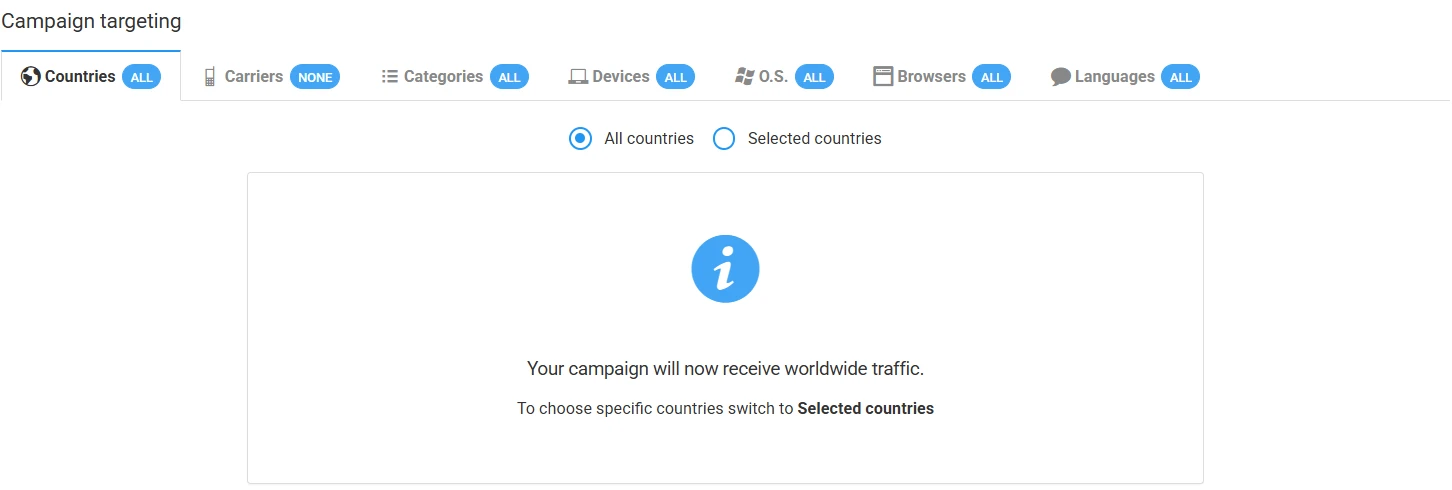
Campaign targeting options in PopCash: countries, carriers, categories, devices, OS, browsers and languages
The same applies to time of day. Many verticals have hours that consistently lose money, and cutting them is often the fastest route from break even to profit.
7. Slow or broken landing pages
Pop traffic is unforgiving about load time. The user is already mildly annoyed, the page sits in a background tab and anything over a couple of seconds gets closed.
Compress images, drop the heavy scripts, host close to your target GEO and open the page yourself on a mid range phone over mobile data. Test every redirect in the chain, including the advertiser’s. A broken redirect on one GEO can quietly eat a full day of budget.
8. Changing everything at once
New bid, new prelander, new GEO, all on the same afternoon. When the numbers move, you have no idea which change did it.
Change one variable at a time and give each change enough traffic to mean something. Keep a simple log of what you changed and when. It sounds tedious, and it is the difference between a campaign you can rebuild and one you got lucky with once.
9. Skipping the compliance check
Every offer has rules, and so does every GEO. Check what the advertiser allows before you launch, not after a conversion gets reversed: allowed traffic types, allowed creatives, allowed countries and any restrictions on the wording you use.
Misleading creatives are a short term win and a long term problem. They inflate clicks, tank conversion quality and get campaigns rejected.
10. Relying only on network statistics
Network reporting tells you what you bought. Your tracker tells you what you earned. You need both, and they will not match perfectly.

Tracking tokens and postback (S2S) details in the PopCash campaign setup
Set up postbacks properly, verify a test conversion before you scale and reconcile numbers regularly. Affiliates who cannot see conversions at zone level cannot optimize, and optimization is the entire game with pop traffic. If you are not sure which numbers to compare first, start with these popunder metrics every affiliate should track.
FAQ
Running without zone level data. Pop inventory quality varies site by site, so an affiliate who cannot see which zones convert has no way to optimize and ends up subsidizing the bad ones with the good ones.
For simple, broad, impulse driven offers it can work. Even then, run a prelander in parallel so you have a comparison instead of an assumption.
Enough to get a meaningful number of conversions on the offer you picked, not a fixed sum. As a rule of thumb, plan for several times the offer payout per test before you make a decision.
Offers that thrive on volume and quick decisions: sweepstakes, utilities, gaming, iGaming where permitted, mobile apps and dating. For a wider view of format and vertical fit, browse the advertiser guides on the Mondiad blog.
Yes, when they are bought properly. Targeting, anti fraud filtering and frequency controls have made the format far more precise than the early web version most people remember.
Ready to run cleaner pop campaigns?
Most of the fixes above cost nothing. They cost attention. Set your cap, pass your tokens, build a prelander and change one thing at a time. If you are setting up a campaign from scratch, our popunder traffic guide for affiliate offers walks through the full setup step by step.
Monetize Popunders With PopCash!
Start your first PopCash ad campaign today → Sign up free
